Smoke Alarm Testing and Maintenance

Find Problems Before You
Need the Alarms in an Emergency

Testing confirms more than a beep, it helps identify faults

Individual and interconnected function checks

Cleaning, condition and expiry assessment

Practical advice on faults and replacement needs

A Test Button Is Important, but It Is Not the Whole Check

Householders should test and clean smoke alarms regularly in line with current Queensland Fire Department and manufacturer guidance. A monthly test helps confirm the alarm can sound; gentle cleaning helps prevent dust and insects from affecting the sensing chamber. Never disable an alarm or remove a battery simply because it has activated unexpectedly.

A professional service goes further. We check the condition and age of the alarms, confirm the required locations remain covered and test whether every interconnected unit activates as intended. This is especially useful where alarms are hard to reach, the system contains several models or a property has changed since the alarms were installed.
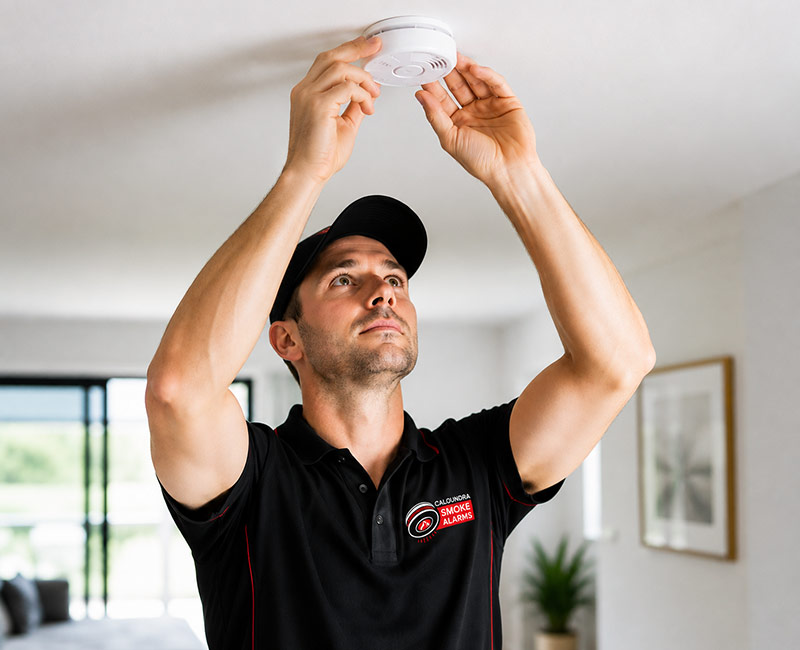
caloundra smoke alarm installation

Smoke Alarm Testing FAQs

Current Queensland Fire Department home safety guidance recommends testing smoke alarms every month. Follow the manufacturer’s instructions as well, because the indicator pattern, test process and cleaning method can vary by model.

Use a vacuum or soft brush to remove dust and insects from around the alarm openings, following the manufacturer’s directions. Do not use water, household cleaning spray, paint or insecticide on or inside the alarm.

The button confirms some alarm functions, but it does not by itself confirm correct age, sensor type, placement, coverage or reliable whole-home interconnection. A professional check examines the system in context.

Yes. When the interconnection test is performed correctly, the linked alarms should activate. If only one sounds, the system may have a compatibility, pairing, wiring, power or product fault that needs investigation.

Yes. Smoke alarms have a limited service life and Queensland requirements specify that compliant alarms must be less than 10 years old. Replace-by information is generally printed on the alarm or identified from its manufacture date and instructions.

Other Smoke Alarm Services